


The arrival of a new year has always been less about the number on the calendar and more about the pause it invites. New Year 2026 feels like a wide breath taken at the edge of something still forming. It is not loud with promises the way some years are, nor is it heavy with dread. It feels quieter, steadier—like standing at dawn before the day decides what it will become. To me, 2026 is a year about integration: of lessons learned, losses carried, hopes refined, and a growing desire to live with intention rather than urgency.
A new year is often framed as a clean slate, but I don’t experience it that way. Nothing truly resets. We carry our histories, our unfinished sentences, our habits and hunger with us across the threshold. What changes is not the baggage, but our willingness to open it, sort through it, and decide what still deserves space. New Year 2026 feels like an invitation to do just that—to stop dragging everything forward by default and instead choose, carefully, what belongs in the next chapter.
Recent years have reshaped our sense of time. Days blurred, plans dissolved, and certainty became conditional. In that context, 2026 feels less like a year for declarations and more like one for alignment: living more honestly as who we already are.
There is collective fatigue, but also clarity. Many of us have learned what does not matter. Priorities shift. Success is no longer constant growth—it is sustainability: in work, relationships, and daily life. Depth over breadth, meaning over
The future does not feel like something to outrun. It feels like something to meet. 2026 asks for presence, attentiveness, and patience. It invites us to slow down enough to notice what is actually in front of us.
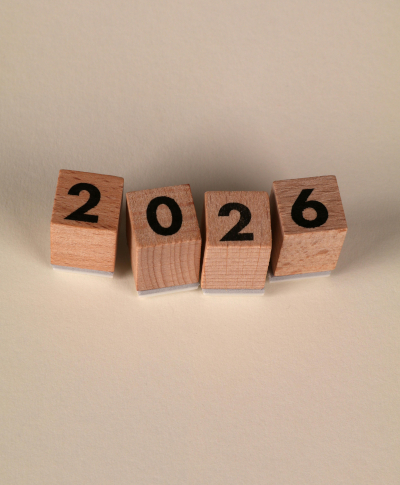 The rituals of the new year—countdowns, resolutions, symbolic toasts—still matter, but differently. They are less about performance and more about acknowledgment. Acknowledging survival. Acknowledging grief. Acknowledging small, uncelebrated victories. Making it to 2026 is not trivial. It means we have lived through uncertainty and contradiction and have learned, at least a little, how to hold complexity without needing immediate answers.
This year is about listening: to the body when it signals exhaustion, to intuition when logic falls short, and to what life is truly asking of us. It also brings a reckoning with scale. The world’s problems are enormous, but meaningful impact is local. 2026 invites care focused on something concrete—a community, a craft, or a place. Narrowing scope brings relief and tangibility.
Hope has changed shape. It is no longer optimism for its own sake. It is confidence that people can adapt and choose better—slowly, imperfectly, sincerely. Hope in 2026 looks like showing up consistently, even when motivation is low.
The idea of “resolution” feels outdated here. Resolution implies a problem to be solved or a decision to be finalized. 2026 feels more like a year of practices—ongoing ways of being rather than fixed outcomes. Practices of patience. Of saying no without explanation. Of noticing beauty without needing to document it. Of rest without guilt. These are not dramatic changes, but they are transformative over time.
New Year 2026 also brings a renewed respect for limits. For the reality that energy is finite, that attention is precious, and that not every opportunity is worth the cost. There is wisdom in choosing less. In protecting mornings. In allowing silence to exist without rushing to fill it. To me, this year is about honoring the boundaries that make a meaningful life possible.
 Memory plays a strong role in how I understand this moment. The past is not something to escape; it is something to integrate. 2026 feels like a year that asks us to stop reliving old stories and start learning from them. To carry forward the insight, not the injury. To remember without being trapped. That kind of remembering requires courage, but it also creates space for something new to grow.
There is an emotional honesty to this year that feels important. Pretending to be fine no longer works. Neither does constant crisis mode. 2026 invites a middle ground: acknowledging difficulty without letting it define everything. Finding steadiness not because the world is calm, but because we have learned how to be.
In relationships, New Year 2026 feels like a call for depth and truth. Fewer masks. Clearer communication. The willingness to be known rather than merely liked. This is a year that values reliability over intensity. Showing up consistently matters more than grand gestures. Trust is built quietly, over time, and 2026 understands that.
Creatively, the year carries a sense of renewal without pressure. Creativity here is not about output or validation. It is about expression as nourishment. Writing that clarifies. Making that steadies the hands. Thinking that feels alive. New Year 2026 reminds me that creativity is not a luxury—it is a way of staying human.
 Spiritually—whether one uses that word or not—2026 feels like a year of grounding. Less searching upward, more rooting downward. Finding meaning in ordinary rituals. In shared meals. In seasonal rhythms. In landscapes that don’t ask us to be anything other than present. There is something deeply stabilizing about that return to the elemental.
There is, finally, a sense that 2026 is a year of responsibility—not in a burdensome sense, but in an empowering one. Responsibility as response-ability: the ability to respond thoughtfully rather than reflexively. To choose kindness without self-erasure. To act with awareness of consequence. At its core, New Year 2026 is a commitment to live awake: noticing moments, people, and internal signals. Meaning is not found all at once but made deliberately, day by day, choice by choice.
By Stephanie Campbell